


Introduction
AI Fluency Has Stopped Being a Bonus — It’s Becoming a Baseline
Six months ago, having AI experience on your resume made you stand out. Today, it’s increasingly expected. More than half — 53% — of U.S. tech job postings in November required AI/ML skills, according to Dice’s 2025 Tech Jobs Report. And the momentum isn’t slowing: 84% of organizations plan to at least moderately increase their investment in AI in 2026.
The numbers tell a compelling story. The proportion of new hires in AI/ML roles grew by 88% in 2025 compared to the previous year — making AI talent the single hottest battleground in the entire tech hiring landscape. And it’s not just the obvious roles. Data scientists, software engineers, cloud architects, and even QA professionals are increasingly expected to understand how AI systems work, even if they aren’t building models themselves.
Professionals with AI and machine learning expertise can earn 15–25% higher salaries compared to generalist counterparts — a premium that reflects just how scarce truly capable AI talent remains. For anyone with Python skills, an understanding of LLMs, or hands-on experience with ML pipelines, the market has never been more favorable.
The practical takeaway: AI fluency isn’t something you can defer. Whether you’re a backend engineer, a product manager, or a data analyst, understanding how AI intersects with your domain is now a career-critical skill — not a nice-to-have.
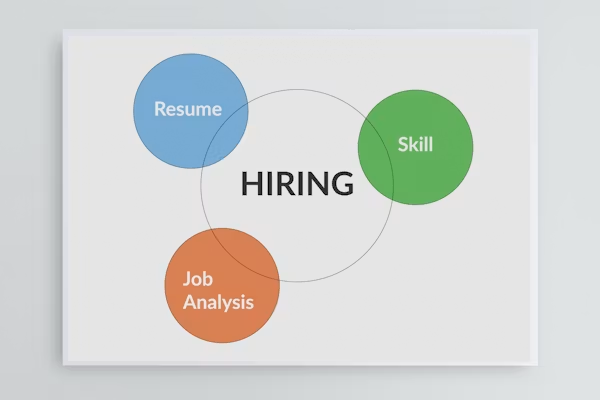
Why it matters: AI skills have crossed from “differentiator” to “standard.” If your resume doesn’t reflect AI fluency in 2026, you’re not just missing an opportunity — you’re falling behind the field.